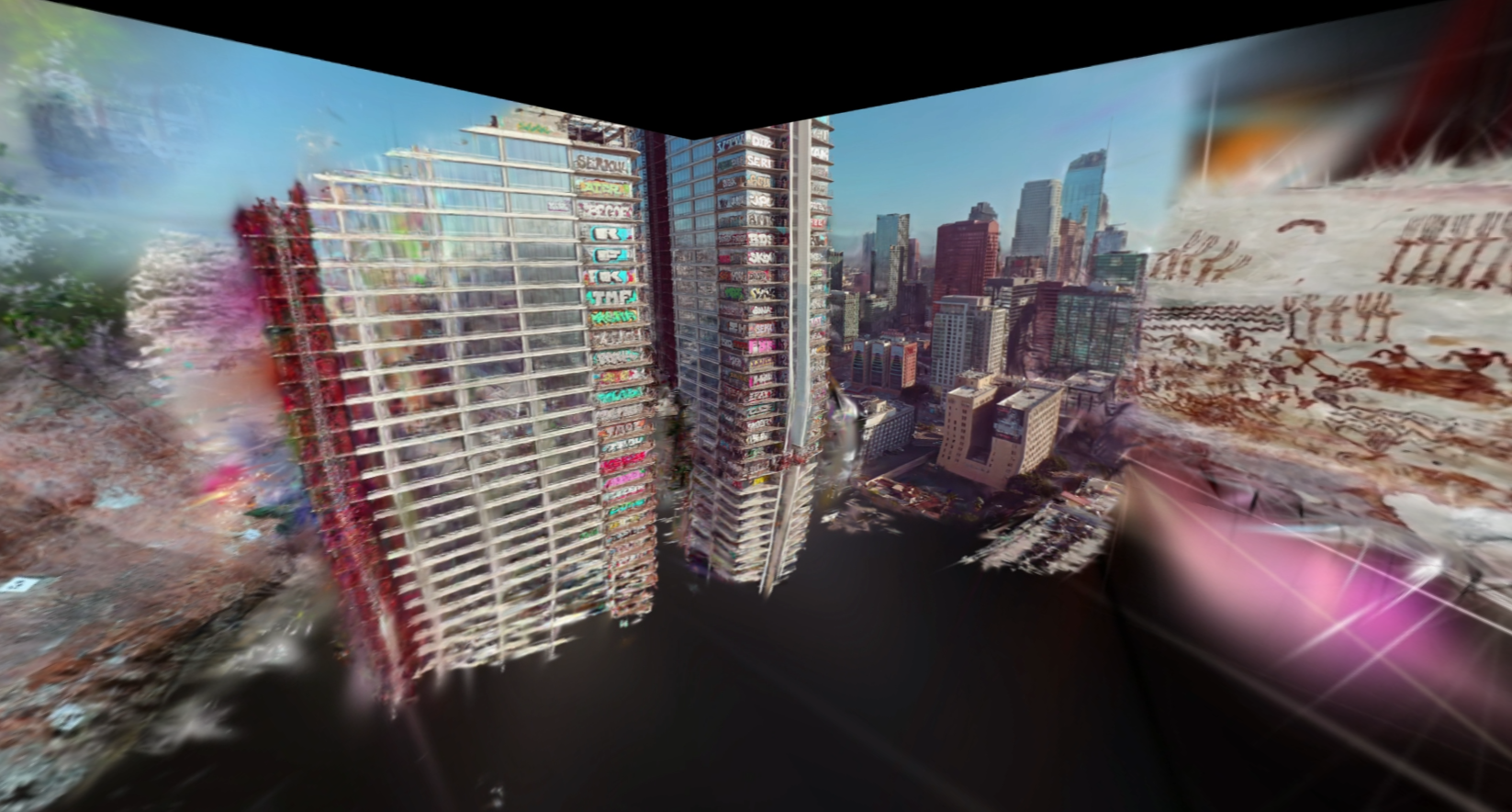
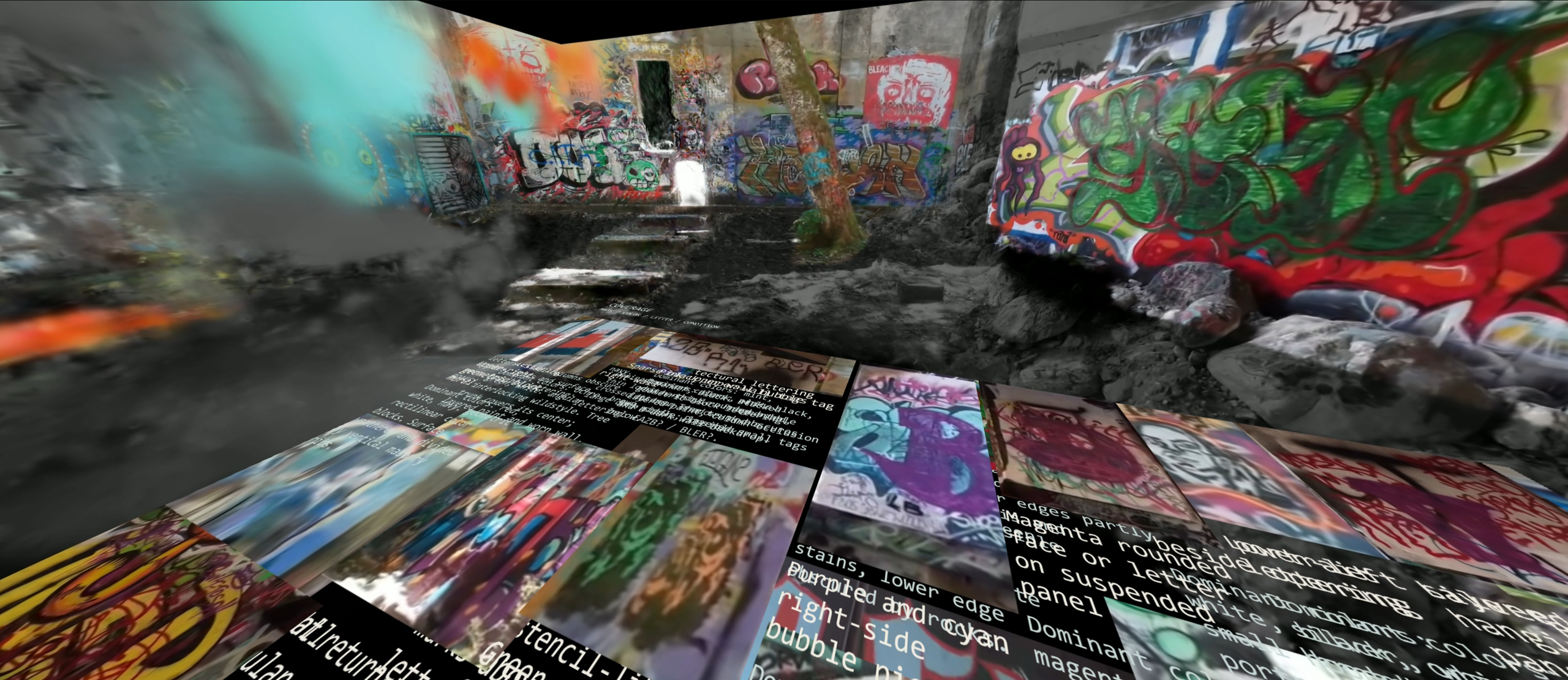
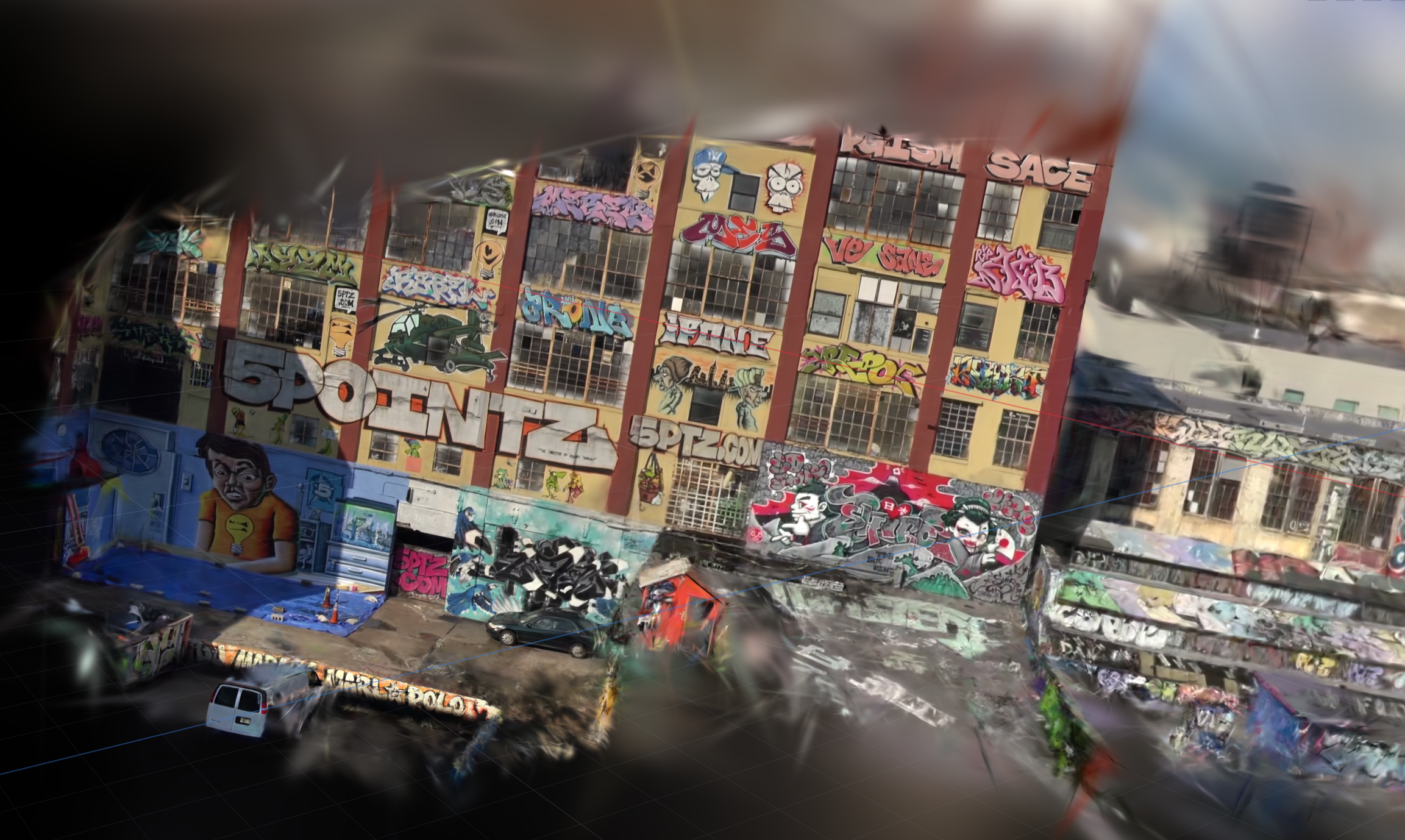
“Hand Record” is an immersive site-specific multimedia piece that will be shown in the Kanvas venue, part of ISEA 2026 in Dubai. It’s roughly 9 minutes long, organized into 6 movements, and depicts a machine entity trying to understand human visual art and music. The composition was designed for the space, which is a 4-screen multimedia room, roughly 20×20 feet in diameter, where one of the displays is the floor itself. I often used the floor to depict the “brain” of this machine entity, showing computer vision algorithms as it dissects the scenes and learns to understand them.
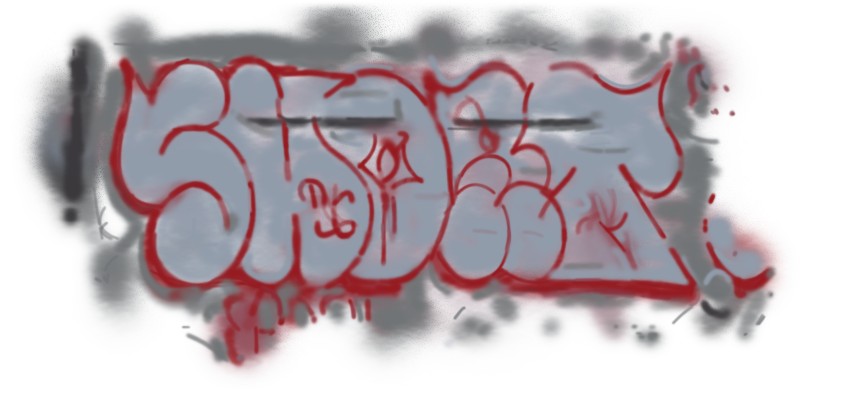
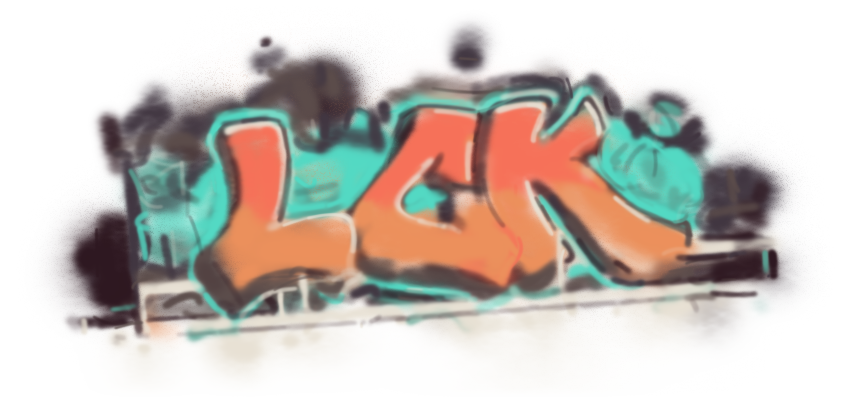
In order to show machine recreation of graffiti tags, I ended up training a model that learned to decompose a target artwork into its composite strokes. This allows us to play back the performance of the painting in real time, which is featured prominently throughout the work. Scenes were turned into 3D gaussian splats which allows the virtual camera to pan and zoom in on different parts of the scene as needed.
Special thanks to Dr. Rincon, Dr. Kim, Dr. Kuchera-Morin, Jack Idaho, and everyone else involved in special exhibition.
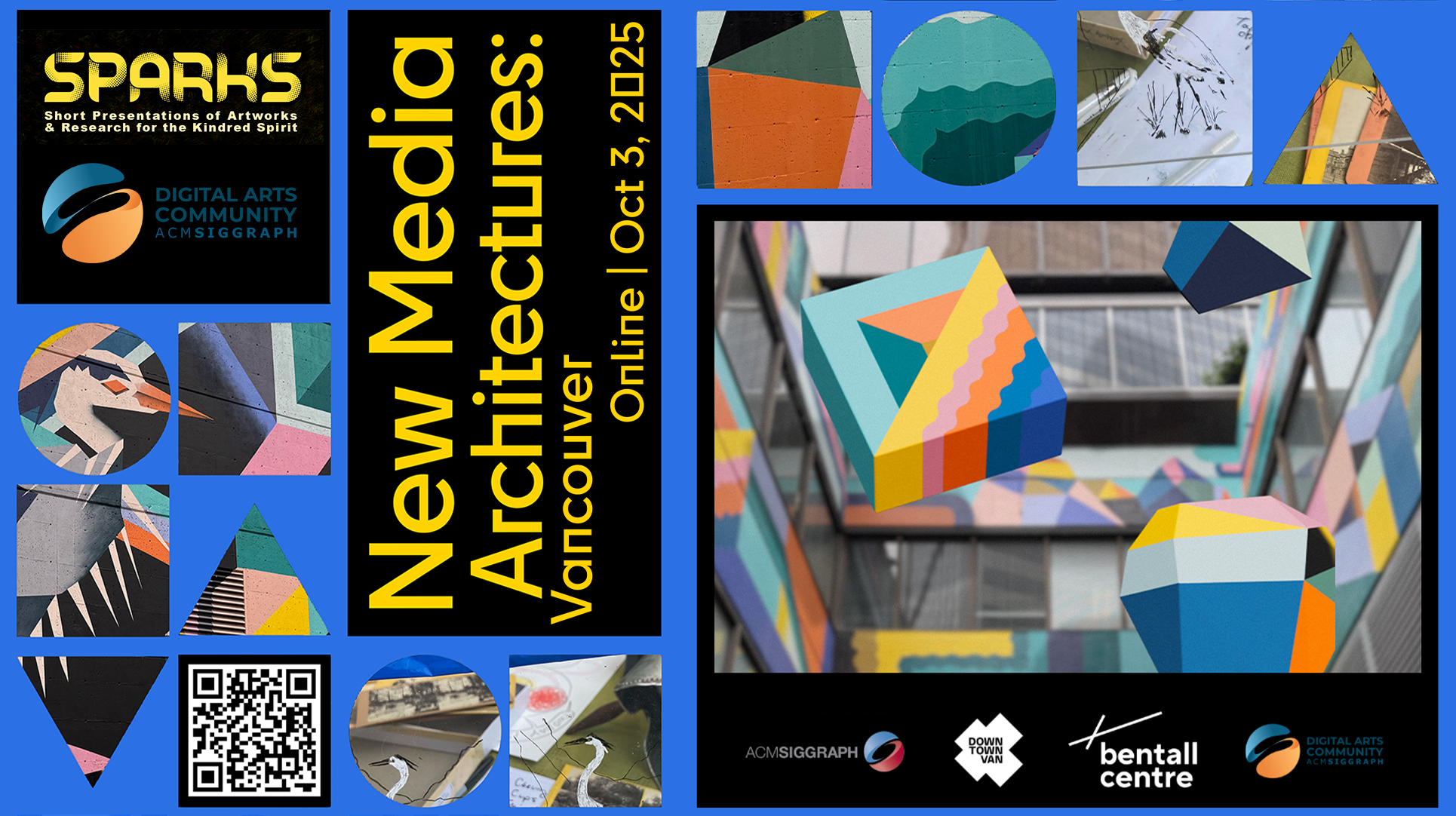
Exhibited at SIGGRAPH 2025 | New Media Architectures: Vancouver
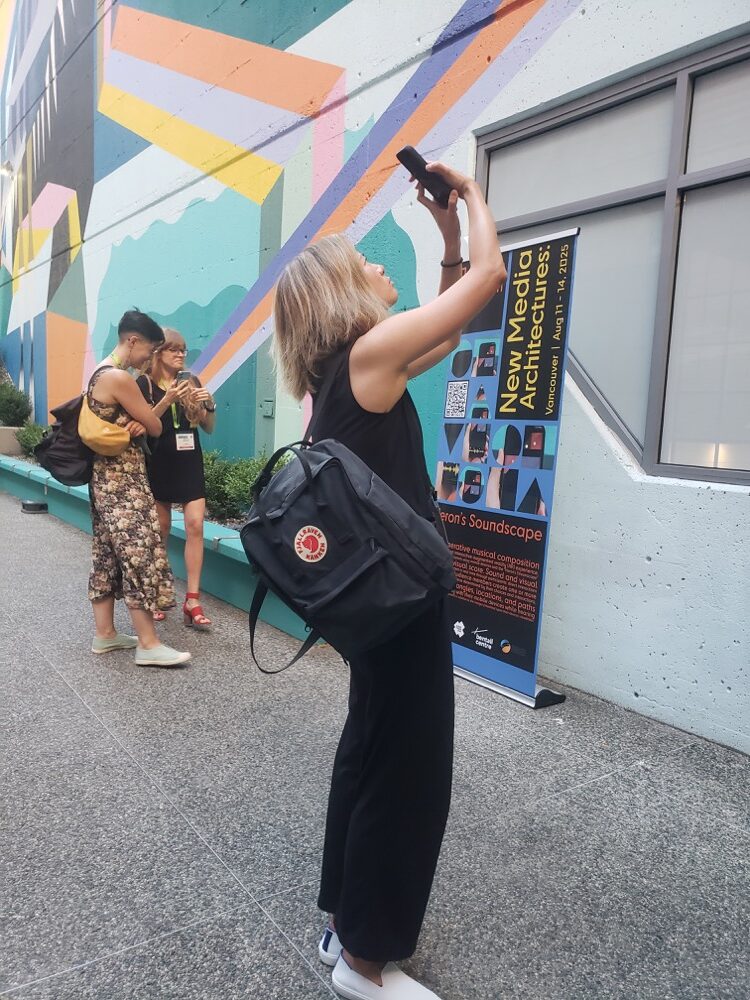
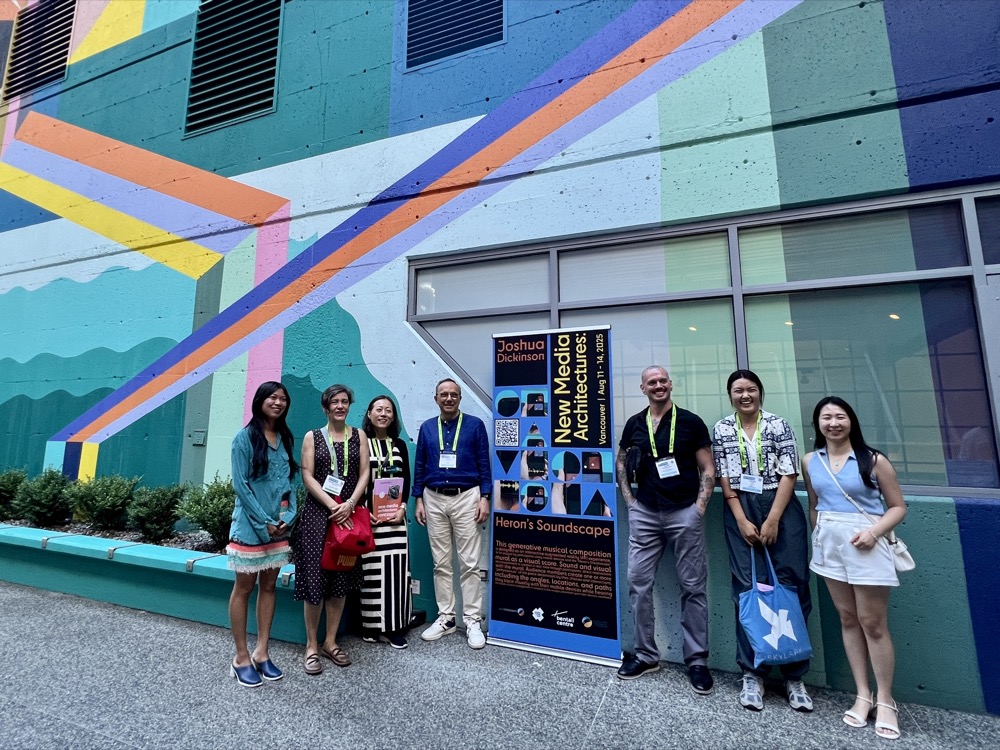
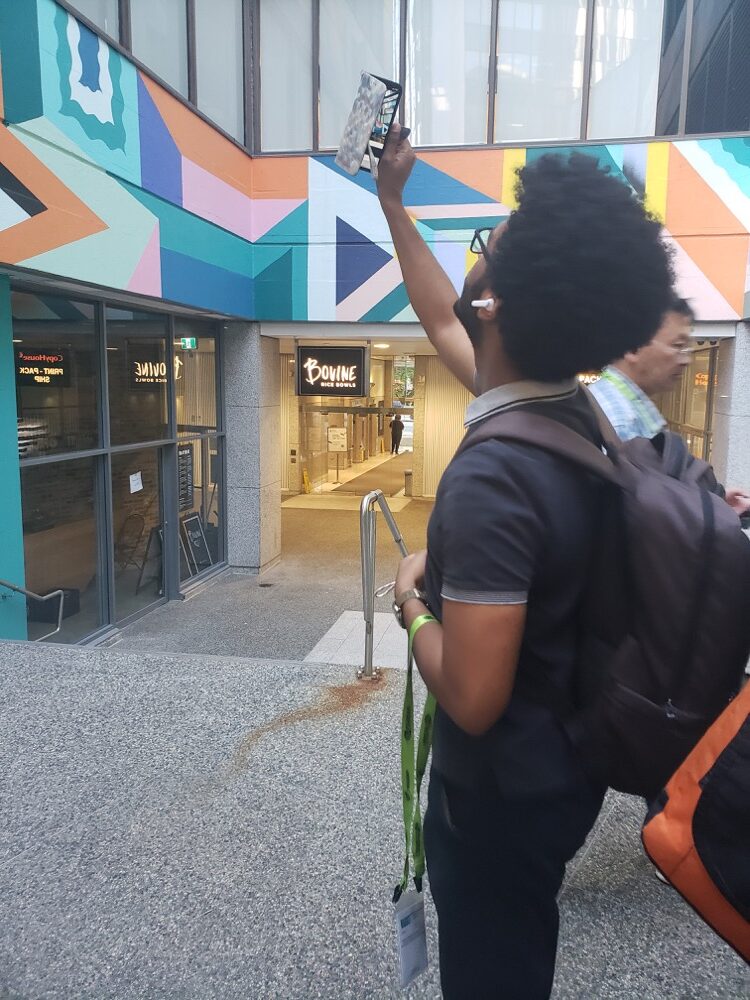
Heron’s Soundscape is a generative musical composition designed as an interactive augmented reality (AR) experience, to be played by participants using mobile devices and the “Heron’s Dreamscape” mural as a visual score. Sound and visual accompaniment is created in real-time through participants’ direct interactions with the mural.
Audience members create one or more “performances” of the piece determined by their choices and interactions, including the angles, locations, and paths they trace visually with their mobile devices while hearing the results of each engagement in relation to the images presented upon their device’s viewfinder.
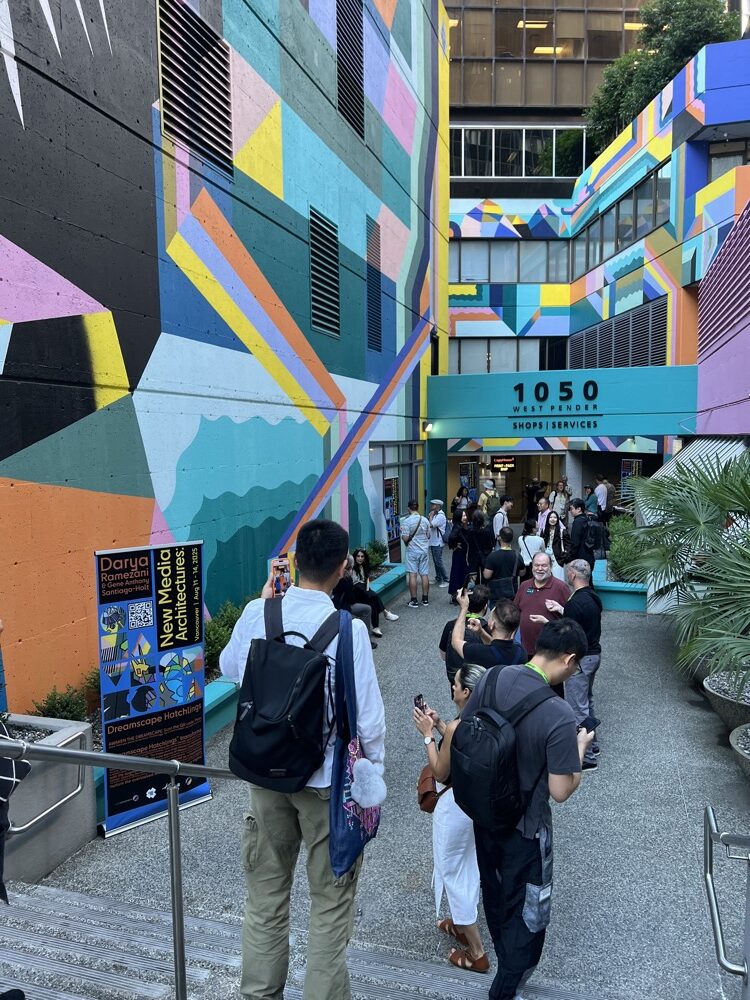
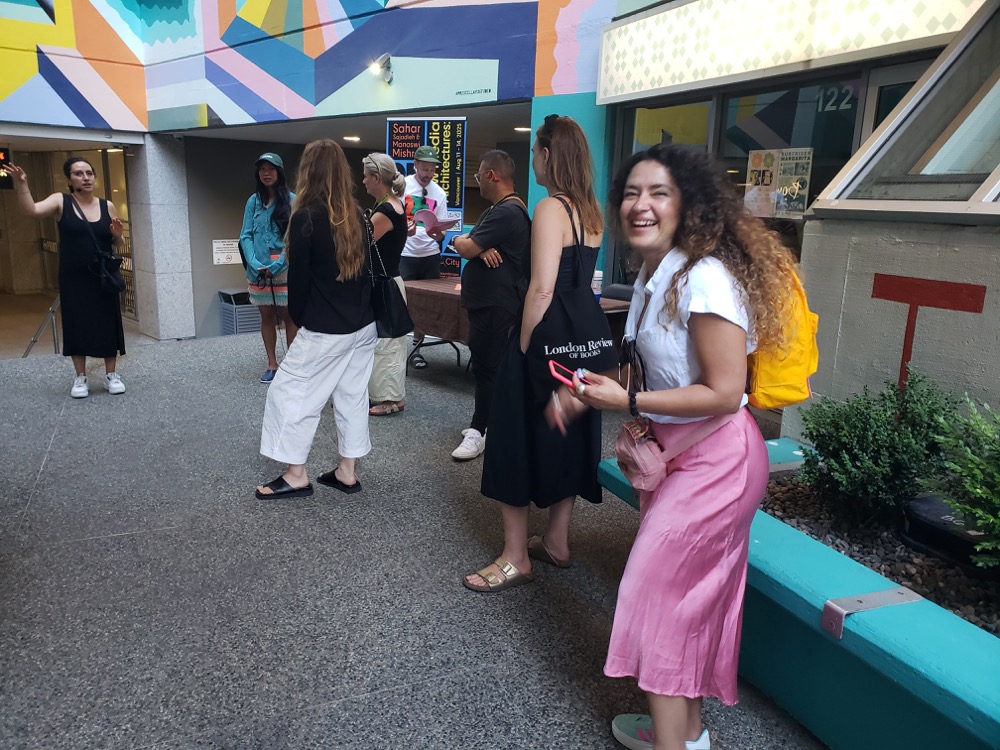
A revisiting of the New Media Architectures: Vancouver exhibition at SIGGRAPH 2025 which featured augmented reality (AR) works by eight artists in dialogue with “Heron’s Dreamscape”, a vibrant public mural by artist Priscilla Yu. Participating artists included: Jiwon Ham & Ana María Cárdenas, Joshua Dickinson, Sahar Sajadieh & Manaswi Mishra, Mike Rader, Darya Ramezani & Gene Anthony Santiago-Holt, and Priscilla Yu. Curated by: Miriam Esquitín, Johannes DeYoung, and Gustavo Alfonso Rincon. The exhibition reimagined the role of public art through digital augmentation, activating the mural as a living interface between place, community, and technology. Our discussion will delve into the collaborative process behind the exhibition and the evolving relationship between physical murals and digital interventions. Together, we’ll explore how site-specific digital media can expand the narrative capacity of public artworks, deepen community engagement, and reframe our experience of urban environments. Through an interdisciplinary lens, the conversation will address the potentials and challenges of blending artistic traditions with emerging technologies — and what it means to co-author public space in the digital age. All audience members will gain insight into the artistic, curatorial, and technical approaches and visions that shaped the exhibition, while reflecting on the broader cultural impact of art in augmented urban landscapes. This SPARKS event will feature artists Joshua Dickinson, Jiwon Ham, Ana María Cárdenas, Mike Rader, and Sahar Sajadieh in dialogue with curators Miriam Equitín, Gustavo Rincon, and Johannes DeYoung. Acknowledgements: This exhibition is organized in partnership with ACM SIGGRAPH, ACM SIGGRAPH DAC standing committee, Bentall Centre, and Downtown Van.
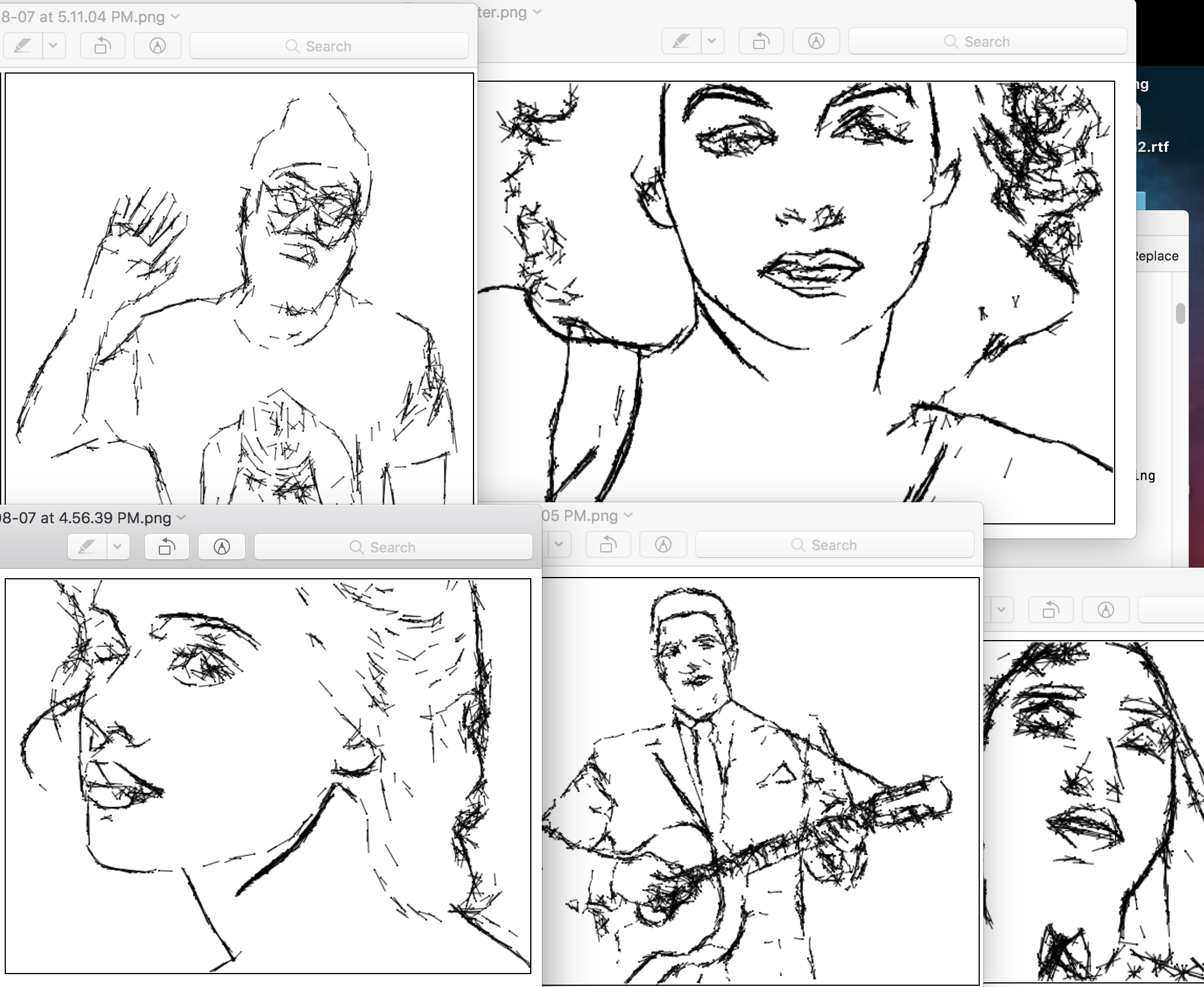
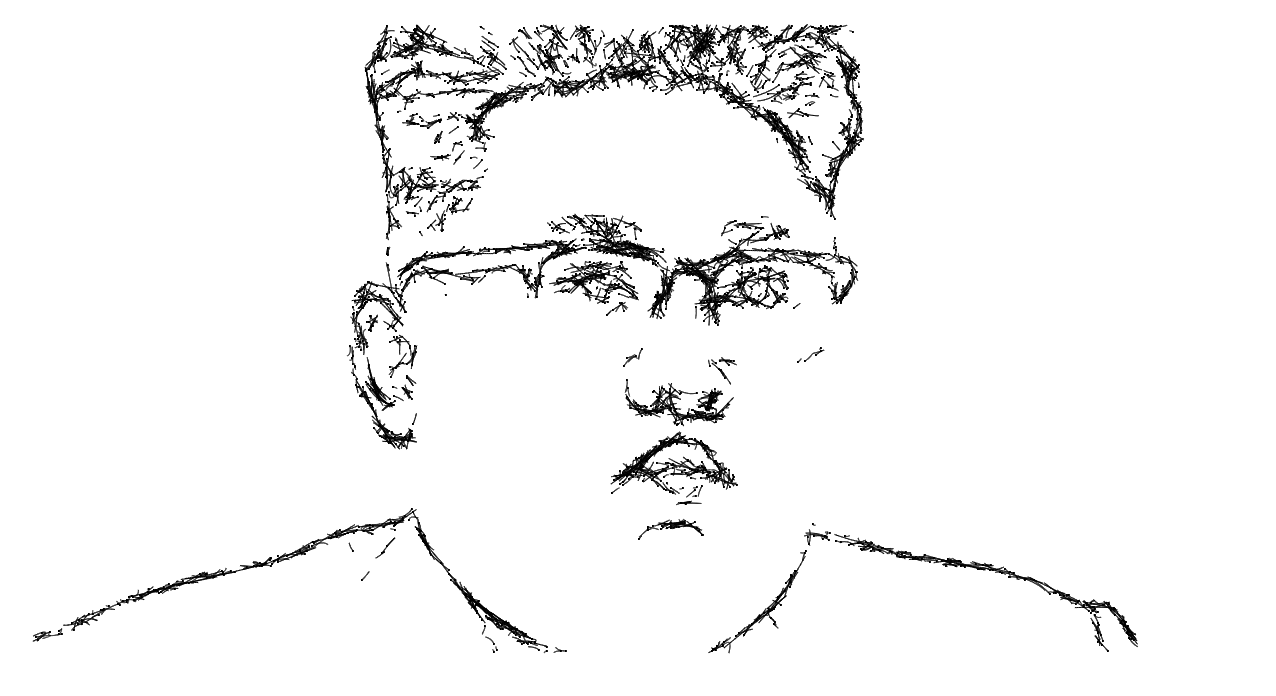
For the past many years I’ve tinkered with various algorithms to take a color photograph and convert it into a line drawing. Unlike other “style transfer” or pencil effects, these are actually made up of individual strokes and can therefore be drawn with a pen plotter or similar device. Some of the more advanced versions even contain simple logic for hatching and cross-hatching in order to produce shading in a technique similar to a real human artist. Thus far, I’ve only used heuristic computer vision approaches, however I hope to one day make use of a bit of machine learning to improve the results aesthetically.
We were honored to be interviewed alongside BT by Justin Colletti of SonicScoop! Together we discuss the origins of Tails, reverb as a compositional tool, medieval music, BT’s original concept for the plugin, and how he uses it creatively. Toward the end of the video we also drop a few surprises related to future projects.
Special thanks to Plugin Alliance for making this happen!
For our ongoing series of interviews through Static Attraction, we talk art and design with Ted Chin, better known by his handle “Ted’s Little Dream.” He was chosen as the 2021 Photoshop splash screen cover artist so it was extremely fun hearing his story about how that happened, as well as his thoughts about the creative community, copyright, and NFTs.
 Music